Let’s figure out what’s actually worth it.
After a big storm, most homeowners check for the obvious: missing shingles, standing water, or a tree limb on the roof. Siding often gets a quick glance—if it still looks attached, it gets marked as fine. That is understandable, and it is also how small problems turn into expensive ones.
In the Southeast and other storm-exposed regions, wind, rain, and flying debris can compromise siding long before anything shows up on interior walls. The damage stays hidden in the wall assembly, where moisture and movement have time to work.
How storm forces actually affect siding

Siding is the outer shield. When it is breached or loosened, the weather-resistive barrier, insulation, and framing behind it become exposed to conditions they were never meant to handle continuously.
Common storm-related mechanisms include:
Wind-driven rain forced into joints, overlaps, or gaps created by movement
Impact damage from hail or debris that cracks, dents, or punctures the cladding
Uplift and racking that loosens fasteners, opens seams, or pulls panels away from the wall
Pressure differentials during high winds that can work panels loose even without visible impact
Once water gets behind the siding, it does not need a dramatic hole to cause trouble. Capillary action, gravity, and repeated wetting-drying cycles are enough.
What happens in the wall before you see interior stains
The sequence is usually quiet:
Water enters through a compromised seam, crack, or gap.
The weather-resistive barrier (housewrap or felt) may shed some of it—if it is intact and properly lapped. If it has been damaged, aged, or installed with gaps, water moves further in.
Sheathing and framing begin to absorb moisture. In humid climates this moisture leaves slowly.
Insulation loses effectiveness when wet and can stay damp.
Repeated cycles lead to swelling, softening, early rot, or conditions favorable to mold in the wall cavity.
Only later—sometimes months or seasons later—do interior symptoms appear: peeling paint, staining, musty odors, or soft trim.
By the time the problem is visible inside, the repair is no longer a simple siding patch. It often involves removing cladding, replacing damaged sheathing, addressing insulation, and rebuilding the weather barrier.
Signs on the exterior that deserve attention after storms
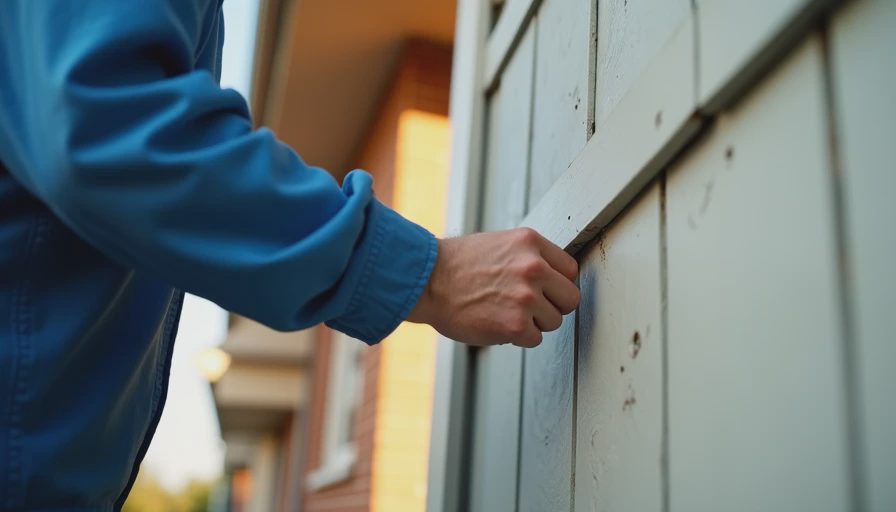
You do not need to wait for interior damage. Check for:
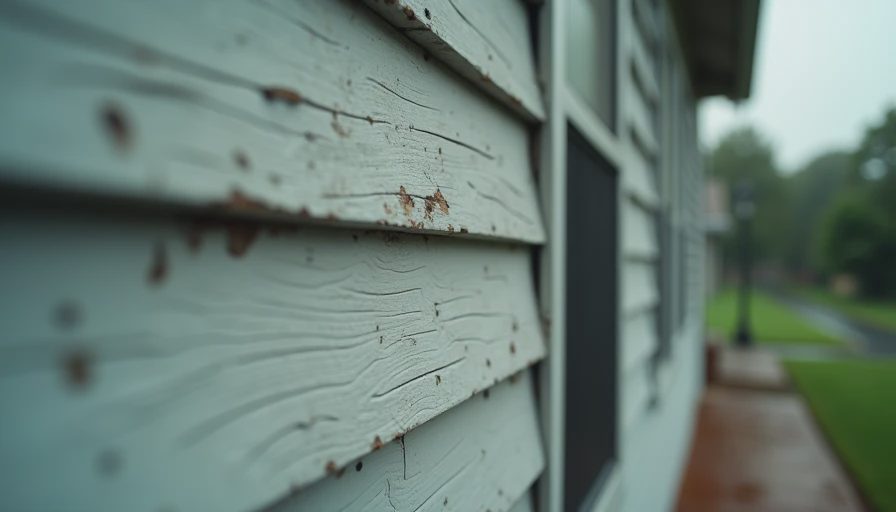
Cracked, punctured, or dented panels (especially after hail)
Sections that have pulled away from the wall or show open gaps at joints
Loose or missing fasteners
Warped or buckled areas that were not present before
Staining or streaking that starts at seams or penetrations and runs downward
Soft or swollen areas when pressed (particularly on older wood or damaged fiber-cement edges)
Caulk failures around windows, doors, and trim that opened during high winds
Any of these after a significant wind or hail event is worth a closer look, even if the house still looks “mostly fine” from the street.
Material differences in storm behavior
Vinyl: Can dent, crack, or have locking mechanisms disengage under impact or extreme wind. Once a panel is compromised, water entry becomes easier. Expansion and contraction already present in the material can widen small openings.
Fiber cement: More impact-resistant and rigid, so it often fares better in hail and wind. It can still crack under severe impact, and any broken edges or failed sealant joints become entry points. The heavier material holds up well when fastening is correct.
Wood and older materials: More vulnerable to both impact and the moisture that follows. Softening and decay can progress faster once water is behind the surface.
No cladding is immune. Installation quality and the condition of the underlying weather barrier often matter more than the material brand after a major storm.
Why timing matters
Moisture problems in walls rarely improve on their own. In hot, humid climates the drying potential can be limited, especially on shaded elevations or walls with vapor-retarding layers. What starts as a small breach after one storm season can become widespread sheathing damage after several wet years.
Addressing loosened or damaged siding promptly keeps the repair at the cladding and weather-barrier level. Waiting until interior finishes show damage usually expands the scope to structural and insulation work.
Practical steps after a storm
Walk the exterior once conditions are safe. Look at all elevations, not just the most exposed side.
Pay special attention to corners, gable ends, areas under roof valleys, and walls that face prevailing storm winds.
Note any new gaps, cracks, or movement.
If you find damage, document it with photos for insurance purposes before making temporary repairs.
Have a qualified contractor inspect both the cladding and the condition of the weather-resistive barrier where panels are removed or loose.
Avoid simply caulking over problems without understanding whether water has already entered the assembly.
Insurance considerations vary by policy and event type. Prompt documentation and professional assessment protect your position whether you are filing a claim or handling the repair directly.
Bottom line
Storm damage to siding often works from the outside in and stays invisible from the interior for a long time. Wind-driven rain, impact, and loosened fasteners can open paths for moisture that slowly degrade sheathing, insulation, and framing. By the time stains or soft spots appear inside, the repair has usually grown.
After significant wind or hail events, treat the siding as something that needs active inspection rather than a quick visual once-over. Catching compromised sections early keeps the fix proportional to the damage.
Not every upgrade has to happen now. The goal is a smarter decision, not a faster yes.
If a recent storm left visible cracks, gaps, or loose panels—or if you simply have not looked closely in a while—this is one of the quieter exterior checks that can prevent much larger costs later.