Let’s figure out what’s actually worth it.
When siding replacement moves from “someday” to “this year,” most homeowners in the Southeast quickly narrow the choice to two materials: vinyl and fiber cement. Both are widely available, both can look good, and both are marketed as low-maintenance. The differences that matter show up in durability under heat and humidity, storm performance, long-term appearance, and total cost of ownership.
There is no single winner for every house. There is a clearer way to match the material to your climate, budget, and how long you plan to stay.
Quick reality check on both materials
Vinyl siding
Made from PVC. Lightweight, relatively affordable, and available in many styles and colors. Modern versions hold color better than older generations and some include insulated backing. It does not rot, and it does not need paint.
Fiber cement siding
A mix of cement, sand, and cellulose fibers. Heavier, more rigid, and more impact-resistant. It is usually painted (factory-primed or pre-finished) and can mimic wood more convincingly than most vinyl. It resists rot, insects, and fire better than wood and holds up well in heat.
Both can perform well in the Southeast when properly installed. Both can disappoint when installation details or product quality are ignored.
How they handle Southeast conditions
Heat and UV
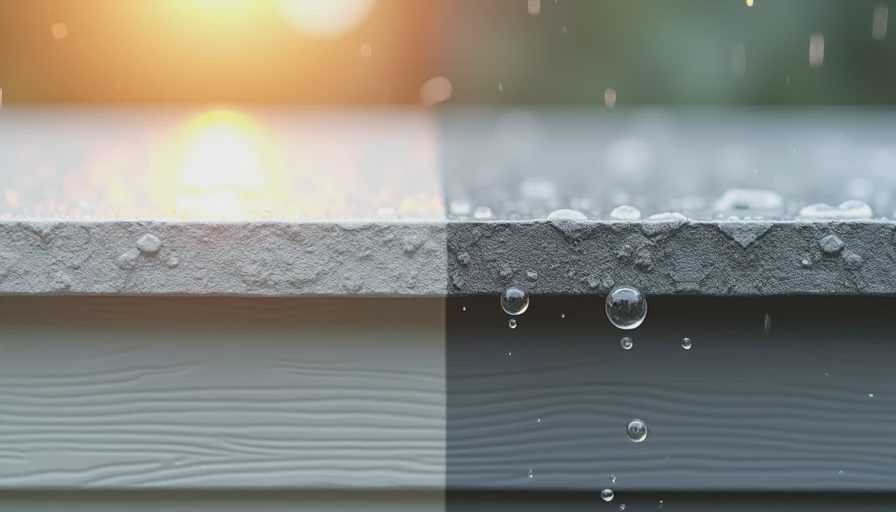
Prolonged high temperatures and strong sun test color stability and material expansion. Quality vinyl has improved, but darker colors and cheaper grades can still fade or become brittle over long exposure. Fiber cement is largely unaffected by heat and UV once painted; the paint system becomes the maintenance item.
Humidity and moisture
Neither material rots like wood. Vinyl is impervious to moisture but can trap water behind it if the drainage plane and housewrap are handled poorly. Fiber cement is stable when kept properly detailed, but the edges and any field cuts need correct priming and painting to avoid moisture absorption over time. In both cases, the wall assembly behind the siding (housewrap, flashing, gap for drainage) matters more than the cladding itself.
Storms and impact
Fiber cement generally wins on impact resistance and wind performance when installed to specification. It is less likely to crack from hail or flying debris and holds up better in high-wind events. Vinyl can dent, crack, or come loose under severe impact or extreme wind if the locking system or attachment is stressed. In hurricane-prone or high-wind zones, this difference is practical, not theoretical.
Movement and appearance over time
Vinyl expands and contracts with temperature swings. On long walls this can show as waviness or gaps if installation does not allow for movement. Fiber cement is more dimensionally stable. Paint on fiber cement will eventually need refreshing (often 10–15 years depending on product and exposure); vinyl never needs paint but can look chalky or faded as it ages.
Cost comparison that includes the long view
Vinyl usually wins on upfront material and labor cost. It is lighter, faster to install, and less expensive per square. Fiber cement costs more for both material and installation because of weight and the need for careful cutting, fastening, and finishing.
Over 15–20 years the gap can narrow or reverse depending on:
How often vinyl needs partial replacement from impact or storm damage
Whether you repaint fiber cement once or twice in that period
Local labor rates and the complexity of the job
Whether insulated vinyl or a continuous insulation layer is part of the system
If you plan to stay a long time and value rigidity and impact resistance, fiber cement’s higher initial cost often looks more reasonable. If the budget is tight or you expect to move sooner, vinyl’s lower entry price is a rational choice.

Maintenance realities
Vinyl: Mostly periodic cleaning. No painting. Watch for cracks, loose panels, or faded sections after severe weather.
Fiber cement: Cleaning plus eventual repainting. Factory finishes last longer than site-applied paint, but nothing is permanent in strong Southern sun. Touch-up of cuts and penetrations matters.
Neither is truly “zero maintenance.” Both are far lower maintenance than wood.
Which makes more sense for most Southeast homes?
Lean toward vinyl when:
Budget is the primary constraint
The house is in a lower-wind, lower-hail area
You want the lowest ongoing maintenance (no painting)
You may not stay long enough to amortize a higher upfront cost
You like the lighter weight and wide color selection
Lean toward fiber cement when:
Impact resistance and storm durability rank high
You want a more rigid, premium appearance that holds paint well
You plan to stay long-term and prefer stability over decades
The house design benefits from a wood-like look without wood’s maintenance
You are already investing in a higher-performance wall assembly
Either can work when:
Installation is done carefully with proper weather barriers and flashing
You choose a reputable product line rather than the cheapest available
The rest of the exterior (trim, soffit, gutters) is addressed so the new siding is not undermined
Installation quality still decides the outcome
The best material installed poorly will underperform a good material installed correctly. Key details for both:
Continuous weather-resistive barrier and proper flashing at windows, doors, and penetrations
Correct fastening pattern and allowance for movement (especially vinyl)
Adequate clearance from grade and roof intersections
Attention to penetrations and trim interfaces
Ask to see how these details will be handled. The answer tells you more about long-term performance than the brand name alone.
Bottom line
In the Southeast, vinyl is often the practical, budget-sensible choice for many homes, especially when storm exposure is moderate and upfront cost matters. Fiber cement earns its keep when impact resistance, rigidity, and long-term appearance under heat and humidity are higher priorities and the budget can absorb the difference.
Match the material to your actual risks, timeline, and budget rather than to general claims about which is “better.” Both can protect the house and look good for years when the product is solid and the installation is careful.
Not every upgrade has to happen now. The goal is a smarter decision, not a faster yes.
If your current siding is failing, start by clarifying your top two or three priorities—cost, storm toughness, appearance, or maintenance—then let those drive the vinyl-versus-fiber-cement decision.