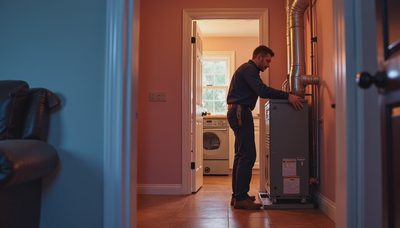
An oil furnace can keep a house warm through long, cold winters, but it is not automatically the best value for every homeowner. Fuel prices, equipment age, maintenance needs, insulation, and local contractor rates all affect the decision. If you own an oil furnace or are considering replacing one, the smart first step is not a sales appointment. It is understanding what the system is costing you and whether a repair, efficiency upgrade, or full replacement makes sense.
For homeowners in the Carolinas, Georgia, Texas, or Florida, heating equipment may not be the biggest energy expense. Cooling, air sealing, and duct performance often deserve attention first. Still, an aging system can waste money and create a winter emergency at the worst possible time. Let’s figure out what’s actually worth it.
How an oil furnace works
An oil furnace burns heating oil in a combustion chamber. The heat warms air, and a blower moves that air through the home’s ductwork. A thermostat starts the cycle when indoor temperatures fall below the selected setting. The basic process is dependable, but it requires more moving parts and fuel handling than an electric heat pump.
The furnace needs a clean nozzle, a working ignition system, an unobstructed flue, and properly adjusted burners. It also needs an oil tank that is in good condition. Indoor tanks can occupy valuable basement space, while outdoor tanks face corrosion and weather exposure. A technician should inspect the tank, lines, combustion chamber, and exhaust path rather than focusing only on whether the unit turns on.
Efficiency is commonly shown as annual fuel utilization efficiency, or AFUE. An older unit might operate around 65% to 75% AFUE, while newer high-efficiency equipment can reach roughly 85% to 95%, depending on the design. That does not mean a replacement automatically pays for itself. The actual savings depend on fuel consumption, heating demand, and how long you plan to stay in the home.

Repair or replace an oil furnace?
Age is useful context, but it should not be the only reason to replace an oil furnace. A well-maintained unit that is 12 years old may be a better short-term choice than a poorly sized replacement installed in a leaky house. On the other hand, repeated service calls can turn a dependable system into a frustrating budget drain.
A repair in the range of $250 to $600 can be reasonable when the problem is a motor, sensor, belt, nozzle, or control component. A larger repair, such as a heat exchanger or major burner assembly, can run from about $800 to $1,500 or more. At that point, compare the repair with the installed price of new equipment, which often falls between $5,000 and $10,000 depending on capacity, chimney work, tank changes, duct modifications, and regional labor.
Replacement deserves serious consideration when the furnace is over 20 years old, has a cracked heat exchanger, produces soot, struggles to reach the thermostat setting, or needs service every heating season. Carbon monoxide risk is especially important. Carbon monoxide alarms are essential, but an alarm is not a substitute for professional combustion testing and proper venting.
A useful rule is to ask for two numbers: the cost to restore safe operation today and the expected cost of keeping the equipment running for the next three years. That comparison usually creates a clearer decision than a contractor’s generic “time for an upgrade” statement.
What an oil furnace costs to operate
Operating cost depends mainly on fuel consumption and the price of heating oil. One gallon of heating oil contains roughly 138,000 BTUs of energy. After accounting for efficiency, a furnace operating at 80% AFUE delivers about 110,000 usable BTUs per gallon. If a household burns 700 gallons in a season, fuel alone can cost several thousand dollars when prices are elevated.
The home itself matters just as much. Drafty windows, uninsulated attic floors, open fireplace dampers, and leaky ducts increase heating demand. Spending $1,000 to $3,000 on air sealing and attic insulation can sometimes reduce fuel use more reliably than replacing equipment while leaving the building envelope untouched. This is particularly relevant in older homes where the furnace has been blamed for a comfort problem caused by uneven insulation.
Thermostat settings also matter. Lowering the temperature by several degrees overnight or while the home is empty can reduce demand, though extreme setbacks can make recovery slow in a poorly insulated house. Replacing a basic thermostat with a programmable model is inexpensive, but it only helps if the schedule matches the family’s routine.
Comparing oil heat with a heat pump
A heat pump moves heat rather than creating it through combustion. In moderate winter weather, an air-source heat pump can often provide heat at a lower operating cost than an oil furnace, especially when electricity rates and fuel prices favor that comparison. It also provides air conditioning, which can eliminate the need for a separate cooling system.
The tradeoff is performance during very cold weather. Many homeowners choose a dual-fuel setup, using a heat pump during milder conditions and an oil furnace as backup when temperatures drop. A properly designed system needs controls that switch between heat sources at a sensible outdoor temperature. It also needs enough electrical capacity and correctly sized ductwork.
In a hot, storm-prone state, a heat pump may deserve more attention than a new oil furnace because cooling runs for much of the year. But do not assume a heat pump is a universal answer. Poor duct design, weak insulation, or an undersized outdoor unit can produce disappointing comfort and savings. Ask contractors to show the load calculation, estimated annual energy use, backup strategy, and warranty terms in writing.

Maintenance that protects your budget
Annual service is one of the least glamorous but most valuable expenses for an oil furnace. A technician typically checks combustion, replaces or inspects the nozzle, cleans relevant components, tests safety controls, examines the flue, and changes the air filter. Service often costs roughly $150 to $300, although local pricing and contract coverage vary.
Keep the area around the equipment clear. Do not store paint, gasoline, cardboard, or household chemicals near the furnace or oil lines. Replace filters on the schedule recommended for the system, usually every one to three months for standard disposable filters. A filter that is too restrictive can reduce airflow and make the blower work harder, so “highest filtration” is not always the right choice.
Watch for practical warning signs: a smoky smell, unusual rumbling, soot around the burner, frequent cycling, delayed ignition, or rooms that stay cold. Shut the system down and call for service if you smell fuel or suspect an exhaust problem. Carbon monoxide alarms should be installed near sleeping areas and tested regularly.
How to get a quote you can trust
Before requesting proposals, gather the furnace model number, approximate installation year, recent fuel usage, repair invoices, and tank location. Ask each contractor to quote the same scope: equipment, removal, permits, venting, oil-line work, thermostat, startup testing, labor, and warranty coverage. A low bid that excludes chimney repairs or tank replacement is not necessarily a bargain.
The contractor should measure the home rather than select a replacement by matching the old unit’s size. Oversized equipment can cycle frequently, waste fuel, and create uneven temperatures. Ask whether the quote includes a Manual J load calculation or another documented sizing method.
Not every upgrade has to happen now. If your current system is safe, reasonably efficient, and inexpensive to maintain, planning a replacement before failure may be enough. If it is unreliable or unsafe, compare local offers promptly, but do not let urgency prevent basic questions. The goal is a smarter decision, not a faster yes.