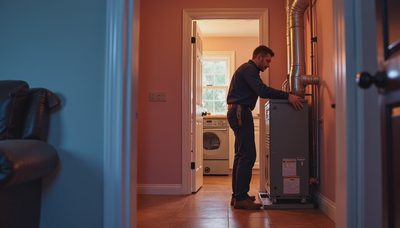
When homeowners search for a furnace gas furnace, they are usually trying to answer a practical question: repair the system, replace it, or consider a heat pump instead? That decision depends on the furnace’s age, safety, efficiency, ductwork, fuel prices, and how long you expect to stay in the house. Let’s figure out what’s actually worth it without turning a basic comfort problem into an unnecessary remodeling project.
What the phrase furnace gas furnace usually means
The wording is repetitive, but it often describes a natural gas furnace used to heat a home. The unit burns gas in a sealed combustion chamber, transfers heat through a heat exchanger, and uses a blower to send warmed air through the duct system. A thermostat controls when the burners and blower operate.
Most modern gas furnaces have an annual fuel utilization efficiency rating, commonly called AFUE. A furnace rated at 80% AFUE turns about 80 cents of each dollar spent on gas into usable heat, while the rest leaves through the venting system. High-efficiency models can reach roughly 90% to 98% AFUE, but installation is more involved because these systems typically produce condensation and need appropriate drainage and venting.
That rating matters most in a cold climate or a home with substantial winter gas use. In Charlotte, Atlanta, or parts of Texas, heating demand is generally lower than in Minnesota, so paying a large premium for the highest rating may not produce a quick payback. A properly sized 95% furnace with good ducts can still be a sensible choice, but the quote should explain the expected savings rather than simply presenting a premium model.
Repair or replace your furnace gas furnace?
Age is a useful starting point. Many gas furnaces last about 15 to 20 years when maintained, although a neglected system can develop problems sooner. A newer unit is not automatically worth replacing if the existing equipment is safe, reliable, and inexpensive to operate.
Repair usually makes sense when the furnace gas furnace has a minor problem, such as a failed igniter, dirty flame sensor, worn blower capacitor, or faulty thermostat. These repairs often fall in the $150 to $600 range, depending on access and labor. A replacement becomes more compelling when a heat exchanger is cracked, the control board and blower fail together, or repair costs approach several thousand dollars on an older unit.
Safety changes the calculation. A technician should inspect combustion, carbon monoxide risk, venting, burner operation, and the heat exchanger. Never ignore a strong gas smell, soot, unusual flame color, repeated short cycling, or a carbon monoxide alarm. Leave the home and contact the appropriate emergency or utility service if you suspect a gas leak. Routine maintenance is not a substitute for professional safety testing.

How much does a new furnace cost?
For many U.S. homeowners, a straightforward furnace replacement can land somewhere around $3,500 to $8,000 installed. Difficult attic or crawl-space access, new venting, electrical changes, duct repairs, permits, and a higher-efficiency model can push the total above that range. A contractor quoting $11,000 should show exactly what makes the project unusual rather than hiding the price inside a vague “premium installation” label.
The equipment itself is only one part of the project. Ask whether the quote includes removal, disposal, startup testing, permits, thermostat work, condensate drainage, gas-line adjustments, and warranty registration. Also ask whether the contractor measured the home or simply matched the old furnace’s size. Oversizing can cause short cycling, uneven temperatures, higher wear, and weaker humidity control.
Get at least two or three written proposals. Compare model numbers, AFUE ratings, labor warranties, manufacturer warranties, installation scope, and payment terms. A low quote that excludes duct sealing or vent corrections may become more expensive than a complete quote from a reputable local company.
Efficiency is more than the furnace label
A high-efficiency furnace gas furnace cannot overcome badly leaking ducts or a poorly insulated home. Ducts in a hot attic can lose a meaningful amount of conditioned air before it reaches bedrooms. Crushed flexible duct, disconnected joints, and missing insulation deserve attention before spending extra on equipment.
Have the contractor check supply and return airflow, static pressure, filter size, and thermostat operation. A restrictive one-inch filter loaded with dust can make the blower work harder. Replacing it on a regular schedule is inexpensive compared with replacing a motor, although the correct schedule depends on the home, pets, occupants, and filter type.
Weatherization can also compete with a furnace replacement for your budget. Air sealing around attic penetrations, improving insulation, and correcting obvious duct leaks may reduce heating demand while improving summer comfort. In a drafty older home, those projects could be more valuable than jumping from an 80% furnace to a 96% model immediately.

Gas furnace or heat pump?
A heat pump moves heat rather than creating it through combustion. In moderate winter climates such as Georgia, North Carolina, South Carolina, and much of Texas, a properly selected heat pump can provide efficient heating while also supplying air conditioning. It may be especially attractive when an aging air conditioner needs replacement at the same time.
A furnace gas furnace can still be the better fit for a home with an existing gas connection, cold winter temperatures, limited electrical capacity, or a homeowner who wants familiar backup heat. Dual-fuel systems combine a heat pump with a gas furnace, switching between them based on outdoor temperature, energy prices, and system controls. Installation costs are higher, so the quote should include a clear explanation of operating assumptions.
Do not compare equipment only by its advertised efficiency number. Compare projected fuel and electricity use, expected maintenance, comfort, noise, backup heat, and replacement timing. The cheapest installation is not always the cheapest system to own.
A practical buying checklist
Before approving a furnace gas furnace project, take these steps:
- Write down the furnace age, repair history, fuel type, and noticeable comfort problems.
- Request a safety inspection, including the heat exchanger, venting, combustion, and carbon monoxide risk.
- Ask for a load calculation or sizing explanation instead of accepting the old unit’s capacity automatically.
- Compare at least two written quotes with model numbers and a complete installation scope.
- Price duct sealing, filter improvements, attic insulation, or air sealing separately.
- Confirm permits, labor coverage, manufacturer registration, and startup testing.
- Ask about rebates or utility programs before signing, because eligibility often depends on equipment and installation details.
Not every upgrade has to happen now. If the furnace is safe, dependable, and reasonably efficient, planning ahead can prevent a rushed winter purchase. If it is failing repeatedly or showing safety concerns, comparison shopping should start immediately. Local contractor quotes can help you see whether repair, standard replacement, high-efficiency equipment, or a heat pump fits your home and budget. The goal is a smarter decision, not a faster yes.