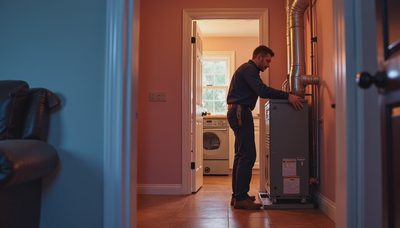
The cost to install geothermal HVAC is usually higher upfront than replacing a conventional air conditioner and furnace, but the system can deliver steady heating and cooling with less exposure to outdoor temperature swings. For many homeowners, the question is not simply whether geothermal works. It is whether the property, budget, and expected length of ownership make the project worth doing.
A typical residential installation often falls somewhere between $15,000 and $40,000 before incentives. A straightforward horizontal loop on a roomy lot can land toward the lower end. A vertical loop requiring drilling, difficult access, electrical work, duct changes, or extensive landscaping can push the total well above $40,000. Local labor rates and soil conditions matter as much as the equipment brand.
What the installation actually includes
Geothermal HVAC uses a heat pump connected to an underground loop. In winter, the system moves heat from the ground into the house. In summer, it reverses the process and moves indoor heat back into the ground. The indoor unit resembles a compact furnace or air handler, but the expensive site work happens outside and underground.
Your quote may include the heat pump, indoor air handler, circulation pumps, loop piping, excavation or drilling, electrical upgrades, permits, duct modifications, thermostat setup, and startup testing. Ask the contractor to separate each category. A single line reading “complete geothermal system” makes it difficult to compare bids or identify an unusually high excavation charge.
The loop design is a major cost driver. Horizontal systems require substantial open ground, but excavation is generally less expensive than drilling. Vertical systems use narrow boreholes and work better on smaller lots, rocky sites, or properties where preserving mature landscaping matters. Pond or lake loops can sometimes reduce excavation, although the site must be suitable and the design must meet local requirements.

Cost to install geothermal HVAC by project type
The cost to install geothermal HVAC often starts around $12,000 to $25,000 for a smaller horizontal-loop project with accessible soil and an uncomplicated duct system. A vertical-loop installation commonly runs from about $25,000 to $50,000, depending on drilling depth, the number of boreholes, equipment size, and local contractor pricing. These are planning ranges, not promises, but they are useful for spotting a quote that deserves more questions.
A larger home may need a two-stage or multi-unit design, which increases equipment and loop capacity. A home with undersized ducts may need return-air improvements before the new system can perform properly. In coastal or storm-prone areas, contractors may also discuss equipment placement, electrical protection, drainage, and access after heavy rain. Those details do not automatically make a quote excessive; they should simply be explained in writing.
Do not compare geothermal with a basic replacement quote alone. Compare it with the cost of replacing your aging HVAC equipment, correcting duct problems, and operating that system for the next 10 to 15 years. A $9,000 conventional replacement may look cheaper today, but it does not provide the same ground-loop infrastructure or long-term efficiency potential.
What changes the price in your yard
The most important site questions are straightforward. How much open land is available? Can drilling equipment reach the work area? Is the soil easy to excavate? Are there rock layers, buried utilities, septic components, irrigation lines, or tree roots? Will the contractor need to remove and replace a driveway, patio, fence, or mature plantings?
In Charlotte, Atlanta, or parts of Texas, a contractor may propose different loop solutions based on lot size and soil. In Florida, groundwater and drainage conditions deserve careful attention. A local specialist should inspect the property rather than estimate the loop from an online form alone. Before signing, ask for a basic site plan showing boreholes or trenches, pipe routing, equipment location, and restoration responsibilities.
Home size and insulation also affect sizing. Geothermal is not a cure for major air leakage or poor attic insulation. If the contractor skips a load calculation and simply matches the new unit to the old one, pause. Oversized equipment can cycle inefficiently, while undersized equipment can struggle during the hottest or coldest days.
Incentives, operating costs, and payback
The cost to install geothermal HVAC can look more manageable when available federal, state, utility, or local incentives are included. Tax rules and program eligibility change, and some incentives require specific equipment standards or documentation. Treat any savings shown on a sales sheet as a possibility until you confirm the current rules through an official government or utility source.
Operating costs depend on electricity rates, house size, thermostat settings, climate, insulation, and the efficiency of the old system being replaced. A geothermal heat pump can reduce heating and cooling energy use because it exchanges heat with relatively stable ground temperatures rather than extreme outdoor air. That does not mean every home receives the same monthly savings.
A simple payback review compares the extra geothermal investment with expected annual savings. For example, if geothermal costs $22,000 more than a conventional replacement and saves $1,500 per year in heating and cooling, the simple payback is roughly 15 years before maintenance and financing costs. If the difference is $12,000 and annual savings are $1,200, the calculation looks more favorable. The goal is a realistic range, not a sales promise.

How to compare geothermal quotes
Get at least two detailed proposals, preferably from contractors who regularly install ground-source systems. Ask whether the price includes permits, trench or borehole restoration, electrical work, duct repairs, water disposal, thermostat controls, startup commissioning, and removal of the old equipment. Also ask who handles failed pipe connections or damaged landscaping during construction.
Check the proposed system capacity and efficiency ratings, but do not choose by rating alone. A correctly sized system with a well-designed loop is more valuable than a premium unit connected to an inadequate ground field. Confirm warranty coverage for the heat pump, indoor components, pumps, and underground loop. Loop warranties can differ significantly from equipment warranties.
A good contractor should explain maintenance in plain English. The indoor unit still needs filter changes and professional service. Pumps, controls, and electrical components can eventually require repair. Underground piping is protected from sun and weather, but installation quality matters greatly because finding a buried leak is more disruptive than replacing an indoor part.
When geothermal makes sense, and when it does not
Geothermal is worth a serious look when you plan to stay in the home for many years, have a suitable lot or drilling budget, face high heating and cooling demand, and are already approaching HVAC replacement. It can also make sense when quiet operation, consistent comfort, and reduced outdoor equipment are priorities.
Waiting may be wiser if your current system is reliable, your property cannot accommodate affordable loop work, or financing would strain the household budget. Not every upgrade has to happen now. Sealing duct leaks, improving attic insulation, replacing a failing capacitor, or installing a conventional high-efficiency heat pump may deliver better near-term value.
The smartest next step is a site-specific quote comparison, not a rushed deposit. Bring your recent utility bills, equipment age, repair history, and plans for staying in the home. Have each contractor explain the same assumptions so the numbers can be compared fairly. The cost to install geothermal HVAC is only one part of the decision; loop quality, contractor experience, incentives, and years of expected use determine whether the investment earns its place in your budget.
Let’s figure out what’s actually worth it. If geothermal looks promising, request local proposals with itemized pricing and ask questions until you can explain what every major dollar is buying.