When your air conditioner hums, struggles to start, or stops blowing cold air on a 95-degree afternoon, the capacitor is one possible culprit. Understanding ac capacitor replacement cost before calling a contractor helps you avoid both panic pricing and unnecessary equipment replacement. In many U.S. homes, a straightforward repair lands between $150 and $450, including parts and labor. The exact bill depends on the capacitor type, system location, local labor rates, and whether another electrical or compressor problem is involved.
A capacitor is a small electrical component that stores energy and gives the compressor or fan motor the boost needed to start and keep running. Central air conditioners commonly use a dual-run capacitor for both the compressor and outdoor fan, while some systems use separate capacitors. Because the component holds an electrical charge even after the power is switched off, testing and replacement should be handled by a qualified HVAC technician.
Typical AC capacitor replacement cost ranges
For a standard residential central air conditioner, homeowners often see these broad price ranges:
- A basic part-only capacitor can cost about $20 to $80.
- A technician’s diagnostic visit may add $75 to $150.
- Labor and installation commonly add $75 to $200.
- A complete service call and replacement often total $150 to $450.
- Emergency, weekend, or after-hours service can push the total beyond $500.
These numbers explain why two quotes can look very different while both remain reasonable. A technician replacing an easily accessible capacitor during normal business hours has a simpler job than one troubleshooting a rooftop unit in July. AC capacitor replacement cost also rises when the contractor must diagnose a failed contactor, damaged wiring, restricted airflow, or a compressor that is drawing excessive current.
The cheapest quote is not automatically the best value. Ask whether the price includes diagnosis, the part, installation, disposal, and a workmanship warranty. A written quote that identifies the capacitor’s microfarad rating and voltage rating is more useful than a vague line reading “electrical repair.”
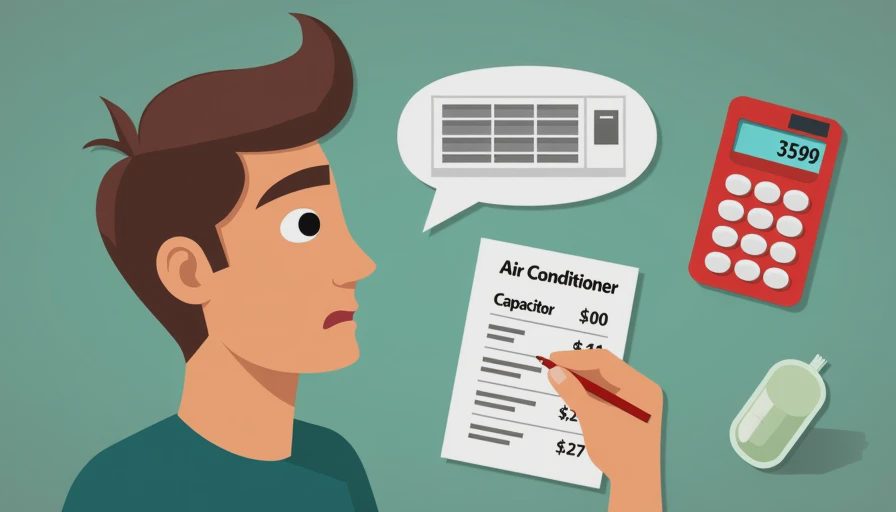
What causes a capacitor to fail?
Capacitors wear out over time, especially in hot climates such as Texas, Florida, Georgia, North Carolina, and South Carolina. Outdoor units sit in direct sun, collect dust, and run for long stretches during the cooling season. Heat places additional stress on the component’s internal materials.
Age is another common factor. Many capacitors last roughly five to ten years, although heavy use, voltage fluctuations, poor airflow, and manufacturing differences affect actual life. A swollen top, leaking oil, bulging sides, or a burnt smell can indicate failure, but a capacitor can also test bad while looking normal.
Typical symptoms include a loud hum from the outdoor unit, a fan that will not start, repeated clicking, short cycling, or warm air from the vents. Some homeowners hear the system attempt to start and then shut down. Continuing to run the unit in that condition can place extra strain on the fan motor or compressor, turning a relatively modest repair into a much larger one.
Storm-related power interruptions and frequent voltage swings can also shorten capacitor life. A surge protector designed for HVAC equipment may provide an additional layer of protection, but it does not make the system immune to electrical damage. If the same capacitor fails repeatedly, the technician should look for the underlying cause instead of simply installing another part.
How contractors determine the price
The first step is usually diagnosis. The technician turns off power at the disconnect and electrical panel, verifies that the unit is safe, and tests the capacitor with a meter. The reading is compared with the component’s stated rating. A capacitor that measures outside its acceptable range may need replacement even if the system occasionally starts.
The contractor may also inspect the contactor, condenser fan motor, compressor terminals, wiring, and air filter. This matters because a weak capacitor and a failing motor can produce similar symptoms. Replacing the capacitor without checking the rest of the system can result in another service call a few days later.
Location affects labor. A ground-level condenser with clear access is quick to service. A unit behind a locked gate, in a cramped attic, or on a commercial-style roof takes more time and may require additional safety equipment. In large metropolitan areas, labor rates can be higher than in smaller communities, while emergency availability often costs more everywhere.
Brand can affect part pricing, but the replacement must match the system’s required specifications. A reputable technician should not install a cheaper capacitor with the wrong voltage or microfarad rating simply to lower the invoice. The right part is the one that meets the equipment manufacturer’s requirements and fits the application.
Repair or replace the air conditioner?
A failed capacitor by itself is usually a repair, not a reason to replace the entire air conditioner. If the system is cooling properly, has no major refrigerant leak, and is not near the end of its service life, spending a few hundred dollars can be sensible. Not every upgrade has to happen now, especially when the repair restores reliable operation.
Replacement deserves a closer look when the capacitor failure is one item on a long list. An older system with a failing compressor, corroded coil, frequent refrigerant problems, and rising electric bills may not justify repeated repairs. For context, full central AC replacement can cost several thousand dollars, often around $5,000 to $12,000 or more depending on efficiency, ductwork, electrical needs, and installation complexity.
A useful rule is to compare the immediate repair with the system’s recent repair history. If you have spent $800 on separate fixes this season and the compressor is showing distress, ask for a replacement estimate as well as the capacitor repair. If this is the first failure in an otherwise dependable unit, repair is often the clearer financial choice.
The decision should also consider comfort. A new high-efficiency system may reduce energy use, but the payback depends on local electricity prices, operating hours, insulation, duct condition, and equipment sizing. Let’s figure out what’s actually worth it rather than treating every service call as a sales opportunity.
How to compare HVAC quotes
When comparing ac capacitor replacement cost, request two or three quotes when the situation is not an emergency. Give each contractor the same information: system brand, approximate age, symptoms, and whether the outdoor unit starts at all. Ask for a line-item price so you can separate diagnosis from installation.
Confirm whether the quote includes a warranty on the part and labor. A 30-day labor warranty is different from a manufacturer’s parts warranty, and the fine print matters. Also ask whether the technician will test the system after installation, measure operating current, and confirm that the fan and compressor start normally.
Be cautious when a contractor immediately recommends a full replacement without showing test results. A capacitor is not an expensive component, but a rushed diagnosis can lead to an oversized project. On the other hand, a quote that is dramatically below every other local estimate may omit the diagnostic fee or use an unsuitable part.
For homeowners in storm-prone regions, ask whether the company offers surge protection, maintenance, or a seasonal inspection. Those services are not mandatory with every repair, but they can be useful if the unit has experienced repeated electrical issues.
A practical next-step checklist
First, write down the symptoms and when they occur. Note whether the indoor blower runs, whether the outdoor fan spins, and whether the breaker trips. Do not remove the panel or touch the capacitor yourself. Turn the system off and arrange professional service if the unit is humming, repeatedly clicking, or failing to start.
Second, check the easy items that do not involve electrical work. Replace a severely dirty air filter, make sure supply vents are open, and clear leaves or grass from around the outdoor condenser while leaving several feet of airflow space. These steps will not fix a failed capacitor, but they can prevent a simple diagnosis from becoming confusing.
Third, request the test result and exact repair scope. Compare the proposed ac capacitor replacement cost with the age and repair history of the equipment. If the quote is reasonable and the rest of the system checks out, the repair may restore cooling for a modest investment.
The goal is a smarter decision, not a faster yes. Get the diagnosis, understand the number, and choose the option that protects both comfort and the household budget.