Let’s figure out what’s actually worth it.
In Florida, gutters are not just a convenience for rainy afternoons. During hurricane season they become part of the house’s first line of water management. Intense rainfall rates, prolonged tropical systems, and wind-driven rain can overwhelm a marginal gutter system quickly. When that happens, water ends up where you do not want it—against the foundation, behind siding, or cascading over fascia.
A short, practical checklist before and during the season prevents most of the avoidable problems. You do not need to make gutters your full-time hobby. You do need them clean, secure, and able to move large volumes of water away from the house.
Pre-season inspection (do this before peak threat periods)
1. Clear the gutters and downspouts
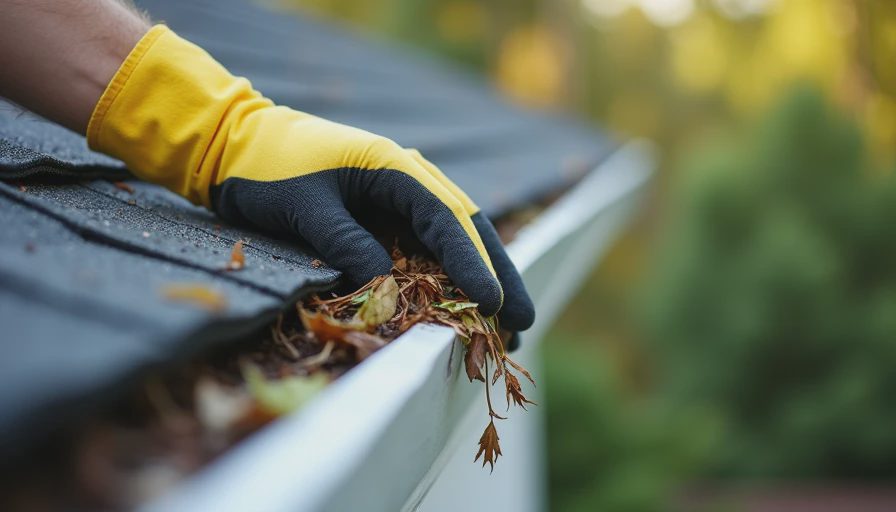
Remove leaves, pine needles, shingle grit, and any standing debris. Flush downspouts with a hose to confirm they flow freely. In Florida the combination of heavy foliage, pollen, and frequent rain means cleaning once is rarely enough for the whole season; plan on checks after major rain events or wind.
2. Check attachment and hangers
Walk the perimeter and look for sections that have pulled away from the fascia, sag between hangers, or show bent or missing hangers. High winds and the weight of water-filled gutters stress these connections. Loose sections are more likely to fail or overflow exactly when rainfall is heaviest.
3. Verify pitch
Gutters should slope consistently toward the downspouts. Standing water after a normal rain is a sign the pitch has been lost or the gutter has settled. Standing water also invites mosquitoes and accelerates corrosion.
4. Confirm downspout capacity and discharge
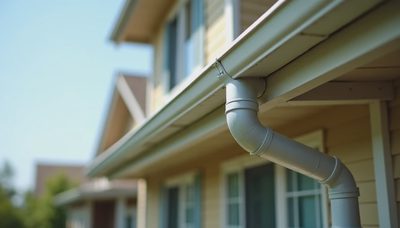
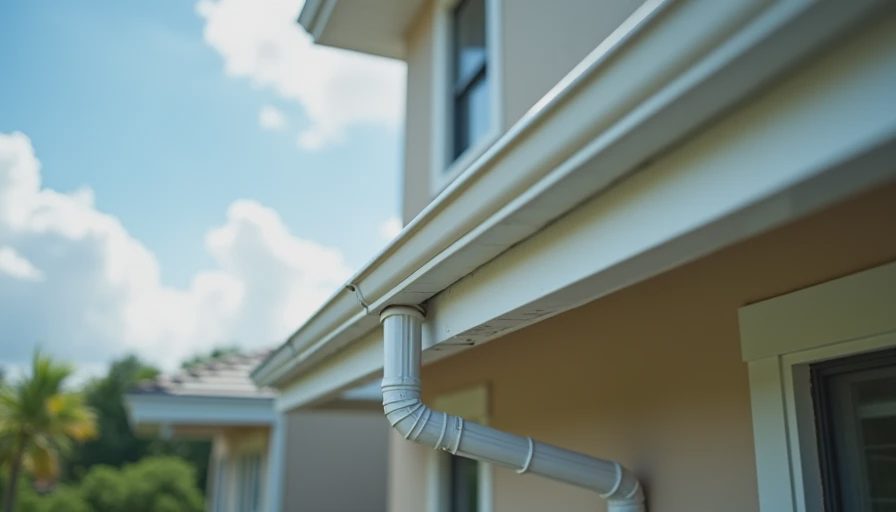
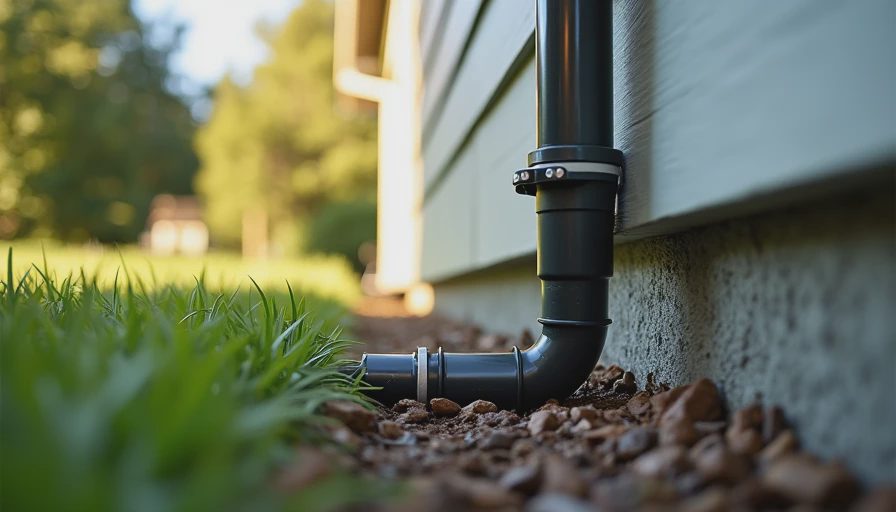
Downspouts should be sized for the roof area they serve and should discharge water well away from the foundation—ideally several feet, and farther on sloped lots. Short or missing extensions that dump water at the base of the wall defeat the purpose of the system. Buried drains should be checked for clogs.
5. Look at fascia and roof edge condition
Soft, rotting, or previously repaired fascia will not hold gutters securely under storm loads. Address questionable wood before the season intensifies. Also check that roof edge metal and drip edges are intact so water is directed into the gutter rather than behind it.
6. Test for overflows on a heavy rain
If possible, observe the system during a strong ordinary storm. Note any sections that cascade over the face, any seams that leak, and whether water is staying in the gutter or sheeting off the roof edge past it. These spots are the ones most likely to fail under tropical downpours.
Material and design considerations for Florida
Size matters. Many older homes still have 4-inch or undersized 5-inch gutters. In heavy-rain regions, 6-inch gutters with adequately sized downspouts handle intense rainfall rates more reliably.
Secure fastening. Hidden hangers or through-fastened systems that are correctly spaced perform better under wind and water load than sparse spike-and-ferrule setups that have loosened over time.
Guards are secondary. Gutter guards can reduce debris load, but they do not fix undersized gutters, poor pitch, or weak attachment. In hurricane season, capacity and structural security come first. Guards can be evaluated after the underlying system is sound.
Corrosion and UV. Coastal salt air and intense sun shorten the life of some materials and finishes. Inspect for rust, chalking, or brittle sections that may fail when loaded with water and wind.
During hurricane season: quick readiness steps
When a tropical system is approaching:
Do a final debris check if time and safety allow. Clogged gutters plus extreme rainfall equal rapid overflow.
Ensure downspout extensions are in place and directed away from the house. Remove or secure any lightweight extensions that could become projectiles.
Do not climb ladders once winds are elevated. If something is already loose, temporary measures from the ground are safer than last-minute roof-edge work.
After the system passes and it is safe, re-inspect for new separation, dents from debris, or sections that shifted under load. Address these before the next round of heavy rain.
Common Florida-specific failure points
Pine needles and small debris that bypass basic guards and accumulate at downspout openings
Gutters that were adequate for ordinary thunderstorms but lack capacity for tropical rainfall rates
Long gutter runs with too few downspouts
Discharge points that send water under slabs, toward window wells, or into poor grading
Fascia that has already softened from previous overflow and can no longer support the system in high winds
When repair is enough and when replacement is smarter
Minor cleaning, resealing of seams, adding hangers, and extending downspouts solve many pre-season issues. Full replacement becomes the rational choice when:
Multiple sections are pulled away or badly corroded
The existing gutters are clearly undersized for the roof and local rainfall intensity
Fascia damage is widespread enough that new gutters would be attached to compromised wood
The system has required repeated emergency attention after ordinary storms
In those cases, upgrading capacity and attachment while the work is being done is usually more cost-effective than repeated patching.
Bottom line
For Florida homeowners, gutters are a seasonal reliability item, not just a maintenance footnote. Clean, securely attached, properly pitched gutters with adequate downspout capacity keep extreme rainfall moving away from the house. The checklist is straightforward: clear debris, confirm attachment and pitch, verify discharge, and check the wood that holds everything up.
Do the work before the season peaks. After major systems, re-check. Guards and premium materials can help, but only after the basics of capacity and security are handled.
Not every upgrade has to happen now. The goal is a smarter decision, not a faster yes.
If your gutters already overflow in ordinary summer storms or show loose sections and soft fascia, this is one of the higher-leverage items to address before the next named storm forms. A few hours of attention now is far cheaper than repairing water damage later.